AOP란?
Aspect Oriented Programming의 약자로 관점 지향 프로그래밍이다
로직을 핵심 기능과 부가 기능의 관점으로 나누어서 보고 각각을 모듈화 하는것이 AOP의 핵심이다
쇼핑몰로 예를 들면 상품을 검색하고, 장바구니에 담고, 결제하는 부분은 핵심적인 비즈니스 로직이라고 볼 수 있고, 유저별로 홈페이지에 체류하는 시간을 측정하는 부분은 부가 기능에 해당한다.
AOP는 부가기능을 Aspect로 정의하여 핵심 기능에서 부가기능을 분리한다.
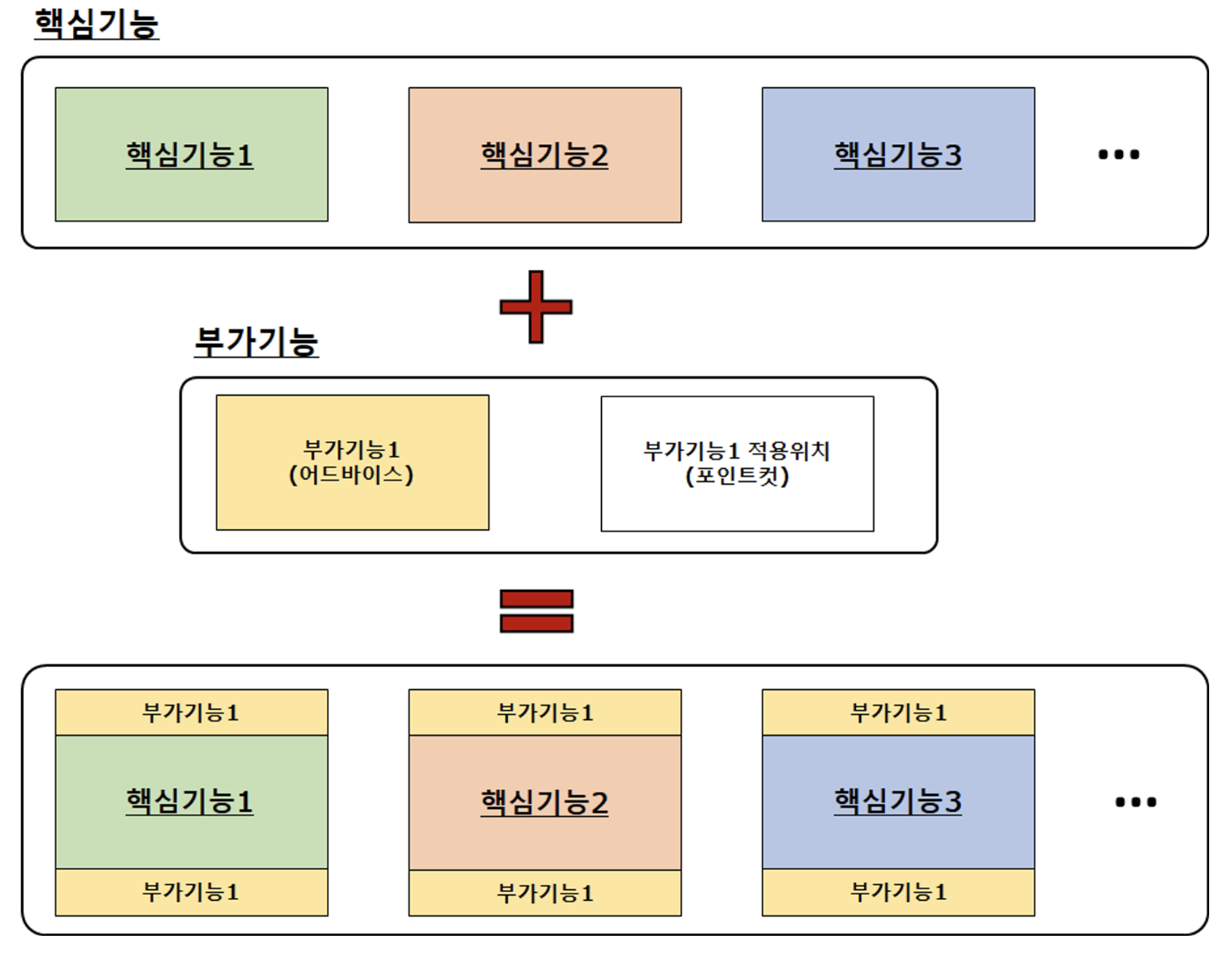
AOP 주요 개념
-
Join point : Aspect가 적용될 수 있는 시점
- @Around : 핵심기능 수행 전과 후에 어드바이스 기능 수행
- @Before : 핵심기능 호출 전에 수행
- @After : 핵심기능 수행 성공/실패 여부와 상관없이 언제나 동작
- @AfterReturning : 핵심기능 호출 성공 시 수행
- @AfterThrowing : 핵심기능 호출 실패 시 수행
-
Advice : Aspect의 기능을 정의한 것
-
Point cut : Advice를 적용할 메소드 범위 지정
@Slf4j(topic = "UseTimeAop")
@Aspect
@Component
@RequiredArgsConstructor
public class UserTimeAop {
    private final ApiUseTimeRepository apiUseTimeRepository;

    @Pointcut("execution(* com.sparta.myselectshop.controller.ProductController.*(..))")
    private void product() {
    }

    @Pointcut("execution(* com.sparta.myselectshop.controller.FolderController.*(..))")
    private void folder() {
    }

    @Pointcut("execution(* com.sparta.myselectshop.naver.controller.NaverApiController.*(..))")
    private void naver() {
    }

    @Around("product() || folder() || naver()")  // 메소드 실행 전후에 적용할 내용
    public Object execute(ProceedingJoinPoint joinPoint) throws Throwable {
        // 측정 시작 시간
        long startTime = System.currentTimeMillis();
        try {
            // 핵심기능 실행
            Object output = joinPoint.proceed();
            return output;
        } finally {
            // 측정 종료 시간
            long endTime = System.currentTimeMillis();
            long runTime = endTime - startTime;

            // 사용자 정보 가져오기
            Authentication auth = SecurityContextHolder.getContext().getAuthentication();
            if(auth!=null && auth.getPrincipal().getClass() == UserDetailsImpl.class) {
                UserDetailsImpl userDetails = (UserDetailsImpl) auth.getPrincipal();
                User loginUser = userDetails.getUser();

                ApiUseTime apiUseTime = apiUseTimeRepository.findByUser(loginUser).orElse(null);

                if(apiUseTime == null) {
                    apiUseTime = new ApiUseTime(loginUser, runTime);
                } else {
                    apiUseTime.addUseTime(runTime);
                }

                apiUseTimeRepository.save(apiUseTime);
            }

        }
    }

}
Spring에서의 AOP
스프링 AOP는 프록시 기반의 AOP 구현체이다.
스프링이 프록시 객체를 중간에 삽입하여 동작하는 형태이다.
